|
What is
Scripophily?
by Bob Kerstein
SCRIPOPHILY
(scrip-af-il-ly), the collecting of
canceled old stocks and bonds, gained recognition as a hobby around
the mid-1970s. The word resulted combining words from English
and Greek. The word "scrip" represents an ownership right and
the word "philos" means to love. Today there are
thousands of collectors worldwide in search of scarce, rare, and
popular stocks and bonds. Collectors who come from the a variety of
businesses enjoy this as a hobby, although there are many who
consider Scripophily an good investment. In fact, over the past
several years, this hobby has exploded. Modern Dot
companies and Scandals have been particularly popular. You can
find our more about modern collectible stock certificates at
ModernStocks.com
Many collectors like the
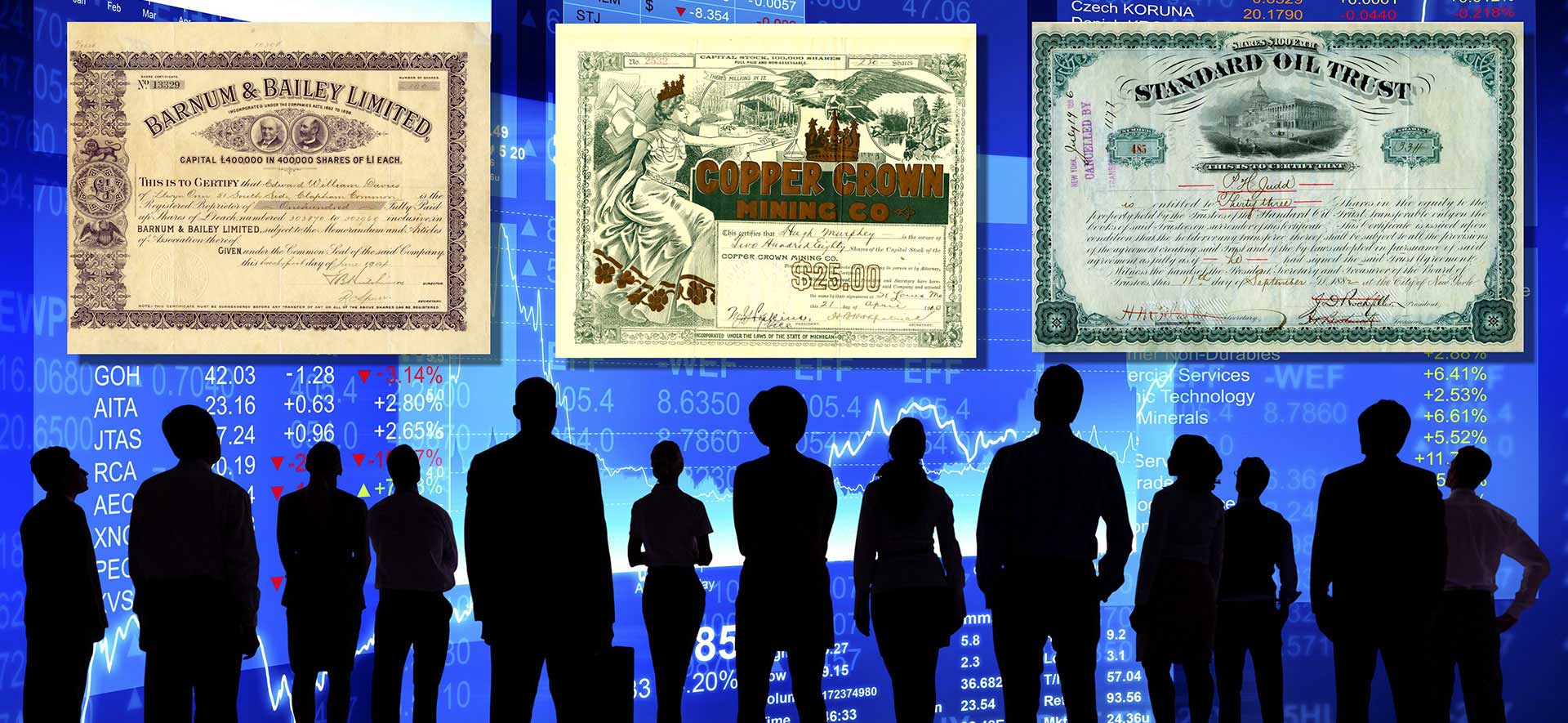
historical significance of certificates. Others prefer the beauty of
older stocks and bonds that were printed in various colors with
fancy artwork with ornate engraving.
Many autograph collectors are
found in this field, looking for signed certificates of famous
people like
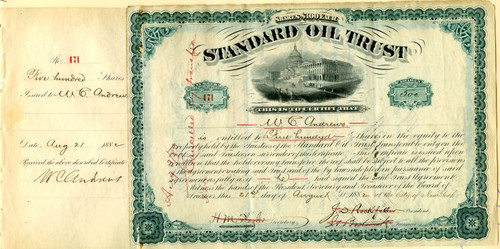
John D.Rockefeller of Standard Oil Company,
Franklin Fire
Insurance Company signed by famed economist Henry Carey issued in 1836,
Ringling
Bros. Barnum & Bailey Circus,
Atari
Corporation,
Eastern Air Lines
with Captain Eddie Rickenbacker as President,
Certificate
signed by George Bush's Great Grandfather Samuel Prescott Bush,
Broadband.com,
Tucker
Corporation and many others. As many certificates become
harder to find, Scripophily is an exciting hobby with lots of
challenges and potential. Since the hobby is relatively new
(around 20 years), it prices are still very reasonable.
Where can you find a 100 year old piece of history with a an
excellent engraving for under $40? Fortunately the hobby hasn't hit
the boiler room call centers yet!
There are many reasons that
contribute to the success of this hobby. First of all, it is a
worldwide collectible since almost all countries of the world have
issued stocks and/or bonds through their governments or businesses.
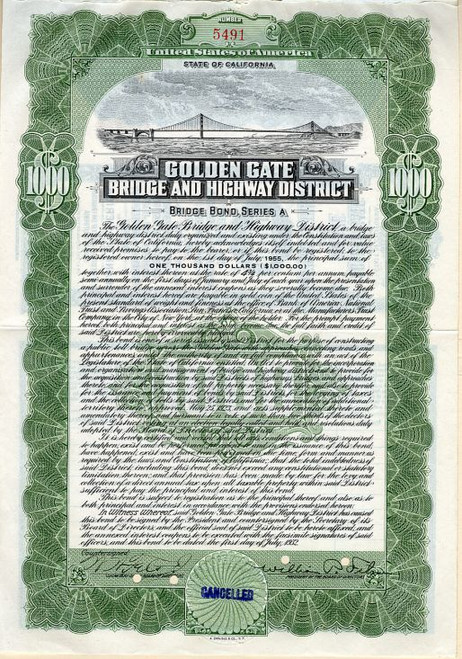
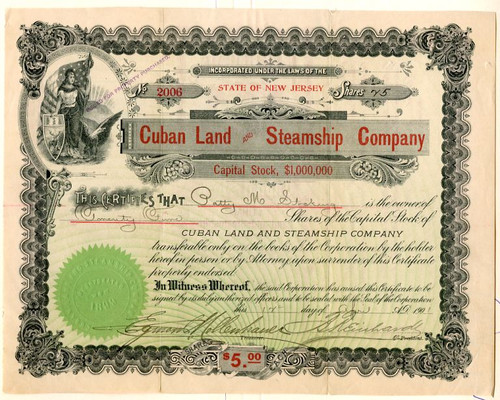
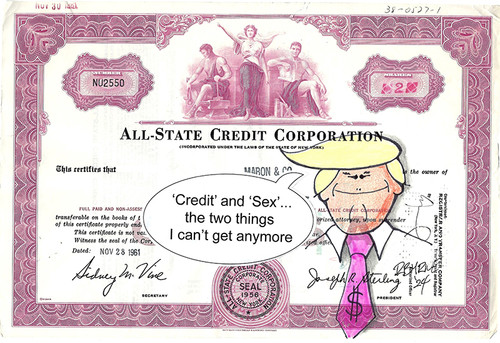
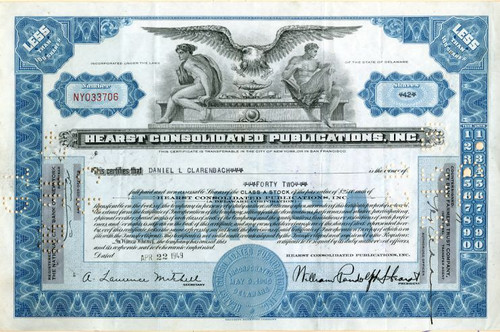
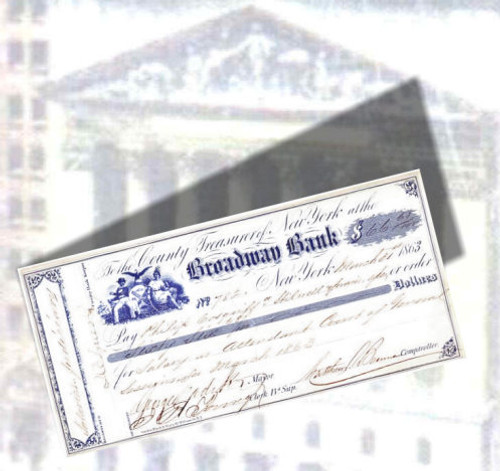
Each certificate is a different piece of history. It describes the
company, the type of instrument (usually stock or bond), the year,
signatures of officers or officials, who it was issued to, the
printer, due date for bonds, and much much more. Many of the
certificates have pictures or vignettes showing anything from cars
to trains to Indians to leaders to nothing at all.
Due to the computer age, more and
more stock and bonds are issued electronically which means fewer
paper certificates are issued as a percentage of actual stock
issued. During the past several years, the Internet has played
a major role in the awareness of the hobby. We have been able
to display and sell thousands of items from our inventory on our
shopping cart at
Scripophily.net. Our customers come from all over the
world. We started in 1996 with a selection of 50 certificates
and now have over 6,300. Without the Internet, this would not have
been possible
The hobby of Scripophily is
one of the most fascinating areas of financial history. Over the
years there have been millions of companies which needed to raise
money for their businesses. In order to do so, the founders of
these companies issued securities. Generally speaking, they either
issued an equity security in the form of stock or a debt security in
the form of a bond. However, there are many variations of equity and
debt instruments. The can be Common Stock, Preferred Stocks,
Warrants, Cumulative Preferred, Bonds, Zero coupon bonds, Long Term
Bonds (over 400 years) and any combination thereof.
When I was CFO at American Mobile
Satellite and we did our roadshow to go public, we flew in a jet for
two weeks and visited over 20 cities. I can't even imagine
what a roadshow must have been like 100 to 150 years ago.
Roadshows by horseback, stagecoaches, trains, etc. What a
different world it is today.
Just as each company is different,
each certificate is different as well. The color, paper, signatures,
images, dates, stamps, cancellations, borders, industry, Stock
Broker, name of company, transfer agent, printer, holder name all
add to the uniqueness of the hobby. Each company needed to raise
money to get into business. Each company had their own story as to
how they did it. These certificates give us a piece of that story.
Some of the companies became major
success stories. Some the companies were acquired and merged into
other companies. Some of the companies and industries were successes
for of time, but were replaced by improvements in technologies. The
railroads are a good example of this.
Most the companies, however, never
made it and the certificates became worthless pieces of
paper....until the hobby of Scripophily came along! There were
many bubbles that came and went. The mining boom in the
1850's, the railroad build out beginning in the 1830's, Oil Boom
beginning in the 1870's, Telegraph beginning in the 1850's,
Automobile Industry beginning at the turn of the 20th,
Century, Aviation beginning around 1910 after the Wright Brothers,
Electric Power Industry in the 1930's, Airline Wars and Takeovers
beginning in the 1970's, Cellular Telephones beginning in the mid
1980's, Banks in the 1930's, Saving's and Loans in the 1970's,
Long Distance Telephone Service in the 1990's, and most recently the
Dot Com rags to riches to rags chapter.
There are many factors that
determine value of a certificate including condition, age,
historical significance, signatures, rarity, demand for item,
aesthetics, type of company, original face value, bankers associated
with issuance, transfer stamps, cancellation markings, issued or
unissued, printers, and type of engraving process.
Condition - The grading
scale that could be used in stocks and bonds is shown below.
Generally speaking, however, the grading is not used in the hobby as
strictly as it is in coins and stamps. Most people acquire
certificates for the artwork and history. Fortunately, the
hobby has not made it to the slabs yet.
- Uncirculated - Looks like
new, no abnormal markings or folds, no staples, clean signature
and no stains
- Extremely Fine - Slight
traces of wear
- Very Fine - Minor traces of
wear
- Fine - Creased with clear
signs of use and wear
- Fair- Strong signs of use and
wear
- Poor- Some damage with heavy
signs of wear and staining
Age
- Usually the older the
more valuable, but not always.
Historical significance - What
product did the company produce? Was it the first car, airplane,
cotton gin, etc. Did the company make it? Was it a fraud? What era
was the item issued i.e. during a war, depression, industrial
revolution?
Signatures
- Did anyone famous or
infamous sign the certificate?
Certificate Owners Name - Was the certificate
issued to anyone famous or a famous company?
Rarity
- How many of the
certificates were issued? How many survived over the years? Is the
certificate a low number?
Demand for item - How many people
are trying to collect the same certificate?
Aesthetics - How does the
certificate look? What is in the vignette? What color of ink was
used. Does it have fancy borders or writing on it?
Type of company
- What type of
company was it issued for? Does the industry still exist? Has the
industry changed a lot over the years?
Original Face Value
- How much
was the stock or bond issued for? Usually, the larger the original
face value, the more collectible it is.
Bankers associated with
issuance
- Who worked on the fund raising efforts? Was it someone famous or a
famous bank? Is the bank still in existence? - Who worked on the
fund raising efforts? Was it someone famous or a famous bank? Is the
bank still in existence?
Transfer stamps
- Does the certificate
have tax stamps on it - imprinted or attached? Are the stamps
valuable or unusual?
Cancellation markings
- Are the cancellation
markings interesting to the item. Do they detract or add to its
history and looks?
Issued or unissued
-
Was the item issued or unissued. Was the certificate a printer's
prototype usually stamped with the words specimen? Usually the
issued certificates are more valuable and desired.
Printers
- Who printed the
certificate? Was it a famous printer?
Type of engraving process - How was the
certificate made? By hand? By Wood engraving? Steel Engraving?
Lithograph? Preprinted Form?
Paper
- Was the paper
use in the printing high quality or low quality. Has it help up over
time? Does it have a watermark used to prevent counterfeiting?
As you can see, Scripophily
is more than just collecting another piece of paper. It is
collecting history. It is something everyone from all ages and all
parts of the world can enjoy. The more you see, the more you
collect, the more you appreciate that stocks and bonds were the
monetary fabric that built the world as we know it today.
At Scripophily.com we hope
you enjoy this hobby as much as we do! It's not just a job for
us, it's an adventure in financial history!

|
We
accept Visa, Mastercard and American Express

© 1996 - 2001 Scripophily.com ® LLC,
Scripophily.net, Wall Street History - Lost and Found (sm) All
Rights Reserved. You may link to the site, but do not copy any
images or information without our expressed written permission.
Thank you!
Scripophily.com ® is powered and designed by
Bob.com.
 |
If you have any
questions, or want to know more about our Corporate Employee
and Executive Gift Programs , please send us an
Email or call our toll free number at
1-888-STOCKS6 (1-888-786-2576.) or direct 703-787-3552.
|
|
Search our Million Dollar Inventory
|
|
|
|
|
|
|